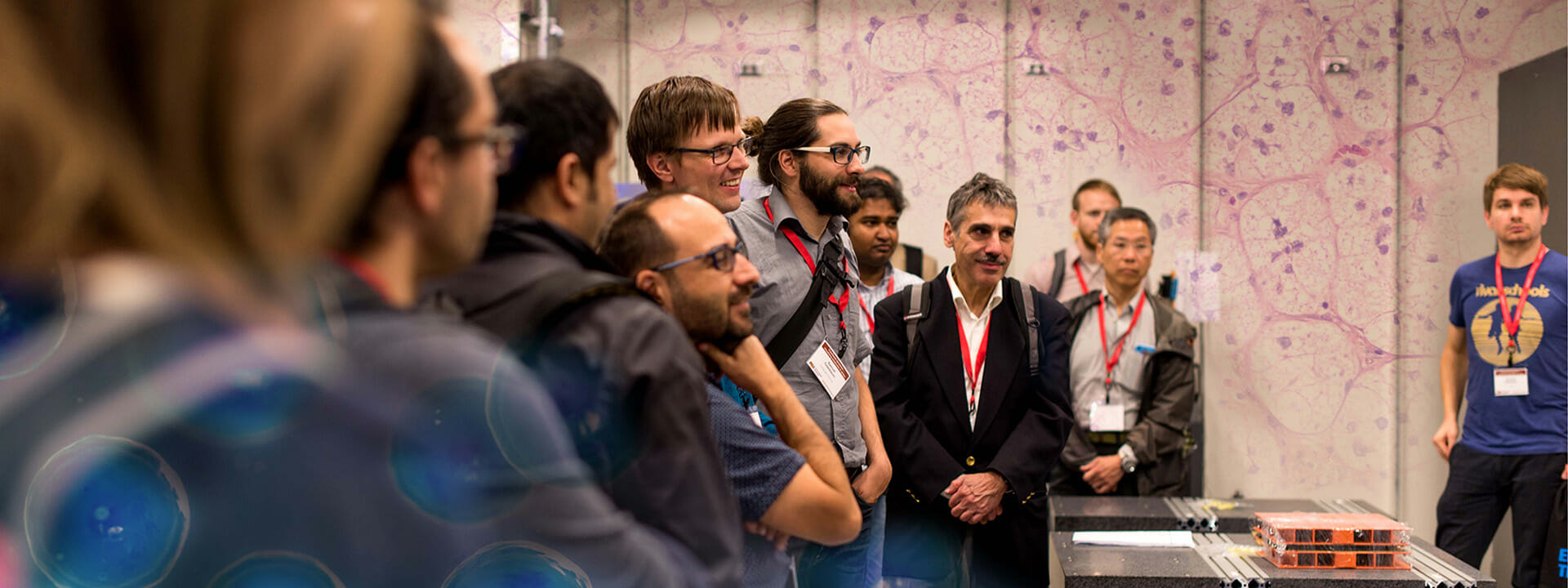
Events

Join us for upcoming events at the ASU Biodesign Institute.

Arntzen Grand Challenges

The Arntzen Grand Challenges Lecture series is inspired by Charles (Charlie) Arntzen, founding director of the ASU Biodesign Institute.

Dr. Arntzen is internationally recognized for his novel applied research on the development of genetic strategies for using plants to manufacture pharmaceuticals and produce cost-effective vaccines or drugs to save lives around the world, especially in developing nations.

Most recent lecture

Barbara Han

Predicting unknown unknowns about emerging infectious pathogens from animals

Thursday, Nov. 20, 2025 6 p.m.

Past lectures

Presented by Barbara A. Han, Disease Ecologist at Cary Institute of Ecosystem Studies.

How can we prepare for infectious diseases we've never encountered, emerging in unexpected places and carried by animals we barely understand?

In recent years, scientists have begun addressing this daunting challenge: predicting the “unknown unknowns” of disease emergence in human populations. These efforts are increasingly critical in a rapidly changing world, where human activities are transforming ecosystems, increasing contact between people and wildlife and creating new opportunities for pathogens to spill over.

In this Arntzen Grand Challenges lecture, Barbara Han examined how researchers are working to make sense of this complexity by integrating ecology, virology and artificial intelligence. She highlighted recent efforts that combine machine learning with biological data to identify bat species that may carry dangerous viruses such as Ebola—and how these approaches can help pinpoint where and when future threats might emerge. While these methods do not yet offer perfect foresight, they represent some of the most advanced tools available for guiding disease surveillance, management and prevention. By working across disciplines and viewing nature through new scientific lenses, researchers are beginning to shift the paradigm: from reacting to pandemics to anticipating them.

Han’s research is at the intersection of ecology, computing and global health. She has pioneered the use of machine learning and artificial intelligence tools to understand when and where new zoonotic diseases are likely to emerge and why.

The Arntzen Grand Challenges Lecture series is inspired by Charles (Charlie) Arntzen, founding director of the ASU Biodesign Institute.

Dr. Arntzen is internationally recognized for his novel applied research on the development of genetic strategies for using plants to manufacture pharmaceuticals and produce cost-effective vaccines or drugs to save lives around the world, especially in developing nations.

About ASU Biodesign Institute:

The Biodesign Institute at Arizona State University delivers the future of nature-inspired scientific innovation today for the betterment of human health, community safety and global sustainability. Its transdisciplinary scientists are united in discovering bold solutions that directly benefit the health of our ecosystem. From individuals, to communities, to the planet, we focus on benefiting the overall health of life by turning our discoveries into technologies that are resilient, adaptive and deployable now and into the future.

Connect with ASU Biodesign:

Visit Biodesign’s website: https://biodesign.asu.edu/
Follow ASU Biodesign on Facebook: https://www.facebook.com/ASUBiodesign/   
Follow ASU Biodesign on Instagram: https://www.instagram.com/asubiodesign/
Connect with ASU Biodesign on LinkedIn: https://www.linkedin.com/company/asu-biodesign-institute

Presented by Barbara A. Han, Disease Ecologist at Cary Institute of Ecosystem Studies.

How can we prepare for infectious diseases we've never encountered, emerging in unexpected places and carried by animals we barely understand?

In recent years, scientists have begun addressing this daunting challenge: predicting the “unknown unknowns” of disease emergence in human populations. These efforts are increasingly critical in a rapidly changing world, where human activities are transforming ecosystems, increasing contact between people and wildlife and creating new opportunities for pathogens to spill over.

In this Arntzen Grand Challenges lecture, Barbara Han examined how researchers are working to make sense of this complexity by integrating ecology, virology and artificial intelligence. She highlighted recent efforts that combine machine learning with biological data to identify bat species that may carry dangerous viruses such as Ebola—and how these approaches can help pinpoint where and when future threats might emerge. While these methods do not yet offer perfect foresight, they represent some of the most advanced tools available for guiding disease surveillance, management and prevention. By working across disciplines and viewing nature through new scientific lenses, researchers are beginning to shift the paradigm: from reacting to pandemics to anticipating them.

Han’s research is at the intersection of ecology, computing and global health. She has pioneered the use of machine learning and artificial intelligence tools to understand when and where new zoonotic diseases are likely to emerge and why.

The Arntzen Grand Challenges Lecture series is inspired by Charles (Charlie) Arntzen, founding director of the ASU Biodesign Institute.

Dr. Arntzen is internationally recognized for his novel applied research on the development of genetic strategies for using plants to manufacture pharmaceuticals and produce cost-effective vaccines or drugs to save lives around the world, especially in developing nations.

About ASU Biodesign Institute:

The Biodesign Institute at Arizona State University delivers the future of nature-inspired scientific innovation today for the betterment of human health, community safety and global sustainability. Its transdisciplinary scientists are united in discovering bold solutions that directly benefit the health of our ecosystem. From individuals, to communities, to the planet, we focus on benefiting the overall health of life by turning our discoveries into technologies that are resilient, adaptive and deployable now and into the future.

Connect with ASU Biodesign:

Visit Biodesign’s website: https://biodesign.asu.edu/
Follow ASU Biodesign on Facebook: https://www.facebook.com/ASUBiodesign/  
Follow ASU Biodesign on Instagram: https://www.instagram.com/asubiodesign/
Connect with ASU Biodesign on LinkedIn: https://www.linkedin.com/company/asu-biodesign-institute

YouTube Video UExDSUxwMmlxTXpqVmJNYTA4elRsQVZkWVFzMFlGSEZXbi5DQUNERDQ2NkIzRUQxNTY1

Predicting unknown unknowns about emerging infectious pathogens from animals

Presented by Carolyn Bertozzi, Nobel laureate, Anne T. and Robert M. Bass Professor of Chemistry and Professor of Chemical and Systems Biology and Radiology (by courtesy) at Stanford University, and an investigator at the Howard Hughes Medical Institute. 

Complex sugars, which scientists call glycans, cover the surfaces of all living cells, where they serve as a molecular barcode that reports on the health status of the cell. Cancer cells are known to undergo changes in the structures and abundances of certain glycans, most prominently those that include a sugar-building block called sialic acid. Consequently, cancer cells have more sialic acids on their surface than healthy, normal cells. We discovered that this dense thicket of sialic acids allows cancer cells to escape recognition by our immune system, which allows the cancer to grow and spread. This finding motivated us to develop a new kind of cancer immune therapy that functions as a “lawnmower,” cutting the disease sugars off cancer cells so that the immune system can recognize them as diseased and kill them.

The Arntzen Grand Challenges Lecture series is inspired by Charles (Charlie) Arntzen, founding director of the ASU Biodesign Institute.

Dr. Arntzen is internationally recognized for his novel applied research on the development of genetic strategies for using plants to manufacture pharmaceuticals and produce cost-effective vaccines or drugs to save lives around the world, especially in developing nations.

About ASU Biodesign Institute:

The Biodesign Institute at Arizona State University delivers the future of nature-inspired scientific innovation today for the betterment of human health, community safety and global sustainability. Its transdisciplinary scientists are united in discovering bold solutions that directly benefit the health of our ecosystem. From individuals, to communities, to the planet, we focus on benefiting the overall health of life by turning our discoveries into technologies that are resilient, adaptive and deployable now and into the future.

Connect with ASU Biodesign:
Visit Biodesign’s website: https://biodesign.asu.edu/
Follow ASU Biodesign on Facebook: https://www.facebook.com/ASUBiodesign/ 
Follow ASU Biodesign on Instagram: https://www.instagram.com/asubiodesign/ 
 
Connect with ASU Biodesign on LinkedIn: https://www.linkedin.com/company/asu-biodesign-institute/

Presented by Carolyn Bertozzi, Nobel laureate, Anne T. and Robert M. Bass Professor of Chemistry and Professor of Chemical and Systems Biology and Radiology (by courtesy) at Stanford University, and an investigator at the Howard Hughes Medical Institute.

Complex sugars, which scientists call glycans, cover the surfaces of all living cells, where they serve as a molecular barcode that reports on the health status of the cell. Cancer cells are known to undergo changes in the structures and abundances of certain glycans, most prominently those that include a sugar-building block called sialic acid. Consequently, cancer cells have more sialic acids on their surface than healthy, normal cells. We discovered that this dense thicket of sialic acids allows cancer cells to escape recognition by our immune system, which allows the cancer to grow and spread. This finding motivated us to develop a new kind of cancer immune therapy that functions as a “lawnmower,” cutting the disease sugars off cancer cells so that the immune system can recognize them as diseased and kill them.

The Arntzen Grand Challenges Lecture series is inspired by Charles (Charlie) Arntzen, founding director of the ASU Biodesign Institute.

Dr. Arntzen is internationally recognized for his novel applied research on the development of genetic strategies for using plants to manufacture pharmaceuticals and produce cost-effective vaccines or drugs to save lives around the world, especially in developing nations.

About ASU Biodesign Institute:

The Biodesign Institute at Arizona State University delivers the future of nature-inspired scientific innovation today for the betterment of human health, community safety and global sustainability. Its transdisciplinary scientists are united in discovering bold solutions that directly benefit the health of our ecosystem. From individuals, to communities, to the planet, we focus on benefiting the overall health of life by turning our discoveries into technologies that are resilient, adaptive and deployable now and into the future.

Connect with ASU Biodesign:
Visit Biodesign’s website: https://biodesign.asu.edu/
Follow ASU Biodesign on Facebook: https://www.facebook.com/ASUBiodesign/
Follow ASU Biodesign on Instagram: https://www.instagram.com/asubiodesign/

Connect with ASU Biodesign on LinkedIn: https://www.linkedin.com/company/asu-biodesign-institute/

YouTube Video UExDSUxwMmlxTXpqVmJNYTA4elRsQVZkWVFzMFlGSEZXbi41MzJCQjBCNDIyRkJDN0VD

Sweet revenge on cancer: How studying sugars may change the practice of oncology

For the culmination of the ASU Biodesign Institute’s 20th anniversary celebrations, the Arntzen Grand Challenges Lecture presented a panel of our founding leaders, including namesake Charles Arntzen, Kathleen Matt, and George Poste. The discussion, moderated by Joshua LaBaer, the institute's current executive director, offered insights into the institute's beginnings. Discussion included the initial support and funding from Arizona tax dollars and how the building was designed to foster a culture of interdisciplinary research.

About ASU Biodesign Institute:

The Biodesign Institute at Arizona State University delivers the future of nature-inspired scientific innovation today for the betterment of human health, community safety and global sustainability. Its transdisciplinary scientists are united in discovering bold solutions that directly benefit the health of our ecosystem. From individuals, to communities, to the planet, we focus on benefiting the overall health of life by turning our discoveries into technologies that are resilient, adaptive and deployable now and into the future.

Connect with ASU Biodesign:
Visit Biodesign’s website: https://biodesign.asu.edu/ 
Follow ASU Biodesign on Facebook: https://www.facebook.com/ASUBiodesign/ 
Follow ASU Biodesign on Instagram: https://www.instagram.com/asubiodesign/ 
Connect with ASU Biodesign on LinkedIn: https://www.linkedin.com/company/asu-biodesign-institute/

For the culmination of the ASU Biodesign Institute’s 20th anniversary celebrations, the Arntzen Grand Challenges Lecture presented a panel of our founding leaders, including namesake Charles Arntzen, Kathleen Matt, and George Poste. The discussion, moderated by Joshua LaBaer, the institute's current executive director, offered insights into the institute's beginnings. Discussion included the initial support and funding from Arizona tax dollars and how the building was designed to foster a culture of interdisciplinary research.

About ASU Biodesign Institute:

The Biodesign Institute at Arizona State University delivers the future of nature-inspired scientific innovation today for the betterment of human health, community safety and global sustainability. Its transdisciplinary scientists are united in discovering bold solutions that directly benefit the health of our ecosystem. From individuals, to communities, to the planet, we focus on benefiting the overall health of life by turning our discoveries into technologies that are resilient, adaptive and deployable now and into the future.

Connect with ASU Biodesign:
Visit Biodesign’s website: https://biodesign.asu.edu/
Follow ASU Biodesign on Facebook: https://www.facebook.com/ASUBiodesign/
Follow ASU Biodesign on Instagram: https://www.instagram.com/asubiodesign/
Connect with ASU Biodesign on LinkedIn: https://www.linkedin.com/company/asu-biodesign-institute/

YouTube Video UExDSUxwMmlxTXpqVmJNYTA4elRsQVZkWVFzMFlGSEZXbi4xMkVGQjNCMUM1N0RFNEUx

Founders Panel: Early Biodesign Institute leaders

Upcoming events and holidays

Discovery Series

The Discovery Series, launched in 2013, brings eminent scientists, thought leaders and innovators from around the world to the Biodesign Institute to share their research expertise.

Discovery Series lectures and interactive discussions which follow exposes our faculty, staff and students to the latest developments in science, technology and medicine, keeping Biodesign Institute researchers abreast of current trends and breakthroughs. Discovery Series events also provide networking and collaborative research opportunities. Lectures are open to the community. Seating available on a first-come, first-served basis. Please join us!

Past lectures

Karen Szumlinski, PhD, Professor, Department of Molecular, Cellular and Developmental Biology & Neuroscience Research Insitute at University of California, Santa Barbara. Recorded April 20, 2022. 

Substance use disorder is a chronic, relapsing, neuropsychiatric condition that affects 2% of the world’s population.  Substance use disorder is the leading risk factor of premature death globally. In addition to the deaths directly attributed to drug over-dose or fatal accidents, substance use increases the risk for many types of cancers, in addition to cardiovascular, metabolic, renal, and hepatic diseases, neurodevelopmental and neurodegenerative disorders, various neuropsychiatric conditions and suicide, accounting for 3-5% of the disease burden in many Western countries. 

The work to be discussed in this talk seeks to identify the environmental, genetic, age- and sex-related determinants of alcohol, opioid, and psychostimulant use vulnerability, as well as their co-morbidity with affective, neurocognitive and eating disorders. Using rodent models, we have distinguished between the neurobiological impact of various addictive substances of relevance to the design of substance-specific therapy. We are exploring and validating the therapeutic potential of drugs already approved by the FDA for other uses for neuroimmune modulation as an approach to reduce drug-taking and craving.

The Discovery Series, launched in 2013, brings eminent scientists, thought leaders and innovators from around the world to the Biodesign Institute to share their research expertise.  Discovery Series lectures and interactive discussions which follow exposes our faculty, staff and students to the latest developments in science, technology and medicine, keeping Biodesign researchers abreast of current trends and breakthroughs.  

The Biodesign Institute at ASU delivers the future of nature-inspired scientific innovation today for the betterment of human health, community safety and global sustainability.

Karen Szumlinski, PhD, Professor, Department of Molecular, Cellular and Developmental Biology & Neuroscience Research Insitute at University of California, Santa Barbara. Recorded April 20, 2022.

Substance use disorder is a chronic, relapsing, neuropsychiatric condition that affects 2% of the world’s population. Substance use disorder is the leading risk factor of premature death globally. In addition to the deaths directly attributed to drug over-dose or fatal accidents, substance use increases the risk for many types of cancers, in addition to cardiovascular, metabolic, renal, and hepatic diseases, neurodevelopmental and neurodegenerative disorders, various neuropsychiatric conditions and suicide, accounting for 3-5% of the disease burden in many Western countries.

The work to be discussed in this talk seeks to identify the environmental, genetic, age- and sex-related determinants of alcohol, opioid, and psychostimulant use vulnerability, as well as their co-morbidity with affective, neurocognitive and eating disorders. Using rodent models, we have distinguished between the neurobiological impact of various addictive substances of relevance to the design of substance-specific therapy. We are exploring and validating the therapeutic potential of drugs already approved by the FDA for other uses for neuroimmune modulation as an approach to reduce drug-taking and craving.

The Discovery Series, launched in 2013, brings eminent scientists, thought leaders and innovators from around the world to the Biodesign Institute to share their research expertise. Discovery Series lectures and interactive discussions which follow exposes our faculty, staff and students to the latest developments in science, technology and medicine, keeping Biodesign researchers abreast of current trends and breakthroughs.

The Biodesign Institute at ASU delivers the future of nature-inspired scientific innovation today for the betterment of human health, community safety and global sustainability.

YouTube Video UExDSUxwMmlxTXpqWHlZeFRnOVpIV09UMjRWaHBVOFZpMi4wOTA3OTZBNzVEMTUzOTMy

Substance use disorder: A global problem requiring an effective translational medicine approach

Subscribe to our newsletter

Learn more about events like these and stay up-to-date on our latest discoveries by signing up for our email newsletter.