
News
Biodesign Institute® as a trusted resource
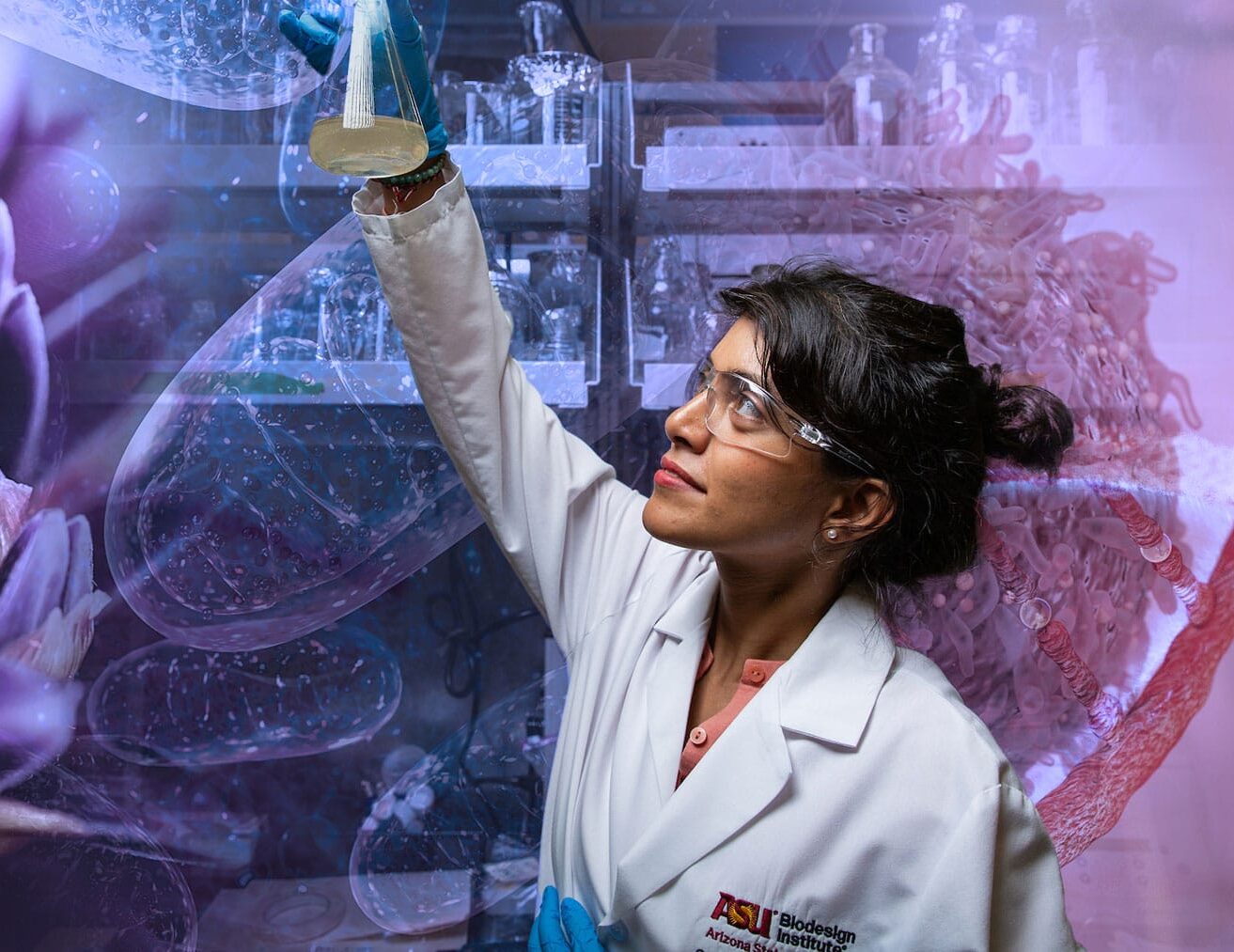
With its world-class facilities, cutting-edge technologies and a talented and diverse team of scientists and engineers, the Biodesign Institute is a trusted resource for addressing the world’s most pressing challenges. Our research and accomplishments have created a proven track record driven by a commitment to innovation, collaboration and making a real-world impact. By leveraging our expertise in biotechnology, engineering and advanced analytics, the Biodesign Institute is ready for what comes next.

$1 billion
Since its formation the Biodesign Institute has attracted over $1 billion in funding from grants as well as philanthropic and industry sources.
300+ projects
Scientists at the Biodesign Institute are undertaking research in over 300 active research projects.
$265 million
A 2021 Seidman Research Institute study estimated that the Biodesign Institute would have a $265 million annual impact on Arizona’s state economy.
True or false?
People can become resistant to antibiotics if they take them often.
Correct!
Incorrect.
Humans cannot develop resistance to antibiotics…but bacteria can! When patients stop antibiotics early, the antibiotic-resistant bacteria in their gut survive and spread to the environment through waste-water systems like our toilets.
Connecting curiosity to discovery
Behind each trivia question is a powerful research story. Our scientists are tackling complex challenges in health, sustainability and technology—delivering real-world solutions that start with bold ideas and a commitment to discovery.
Spotlight: Biodesign Alumni
Hear from past members of our community as they discuss how the Biodesign Institute fosters a new frontier of interdisciplinary research and connections.
Connections leads to innovation
The Biodesign Institute is home to researchers from a variety of disciplines who come together to tackle some of humanity’s most complex challenges. This innovative spirit has led to 382 patents and 57 startup companies. Learn more about our ongoing work in the following areas of focus.
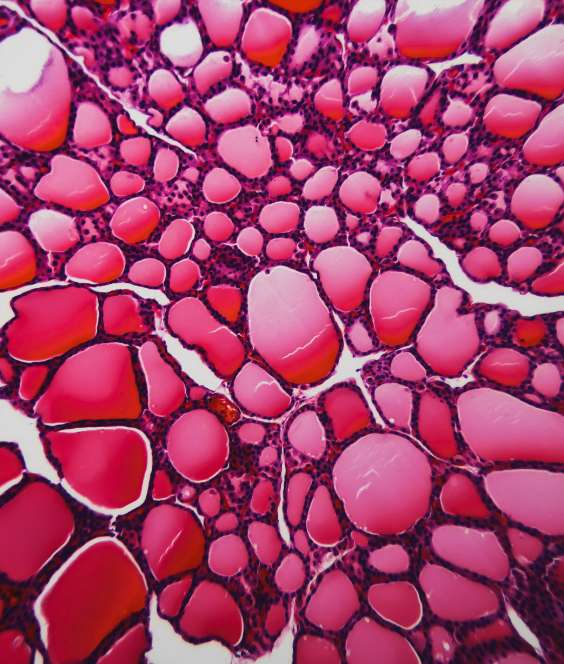

At the Biodesign Institute, we are committed to catching disease before it catches us. We are finding creative and clean solutions for energy, air and water. We are inventing diagnostics and treatments that are accessible and affordable. We are growing next-gen researchers who will do the impossible.