Our impact
20 years of impact
Biodesign Institute scientists have created a therapy against the Ebola virus, discovered an early diagnostic for breast cancer and provided data that brought potentially harmful chemicals in personal-care products to light.
These are just a handful of ways our research is leading to discoveries and inventions that answer today’s challenges. As the premier scientific research institute in the nation’s fastest-growing research university, the Biodesign Institute’s impact is accelerating. We invite you to explore highlights of our accomplishments and join us in designing a better future.
The Biodesign Institute’s impact is evidenced in three key areas: capturing significant external funding to generate research output, attracting premier scientific talent and high-wage jobs to Arizona, and spurring innovation that produces economic growth.
$1 billion
$1B in cumulative external funding
$265 million
$265M AZ annual direct impact
Estimates are from L. William Seidman Research Institute report, 2021
$21 million
$21M annual state and local tax revenues
Estimates are from L. William Seidman Research Institute report, 2021
History unfolding: Highlights from our timeline

Neurodegenerative disease
Research IDs unique hallmarks of six neurogenderative diseases, opening new therapy approaches.

Clean water for spaceflight
Study characterizes different bacterial populations from drinking water from International Space Station.

COVID-19 saliva test
First saliva-based COVID-19 test in the southwestern U.S. to be made widely available to the public
Safer snipping
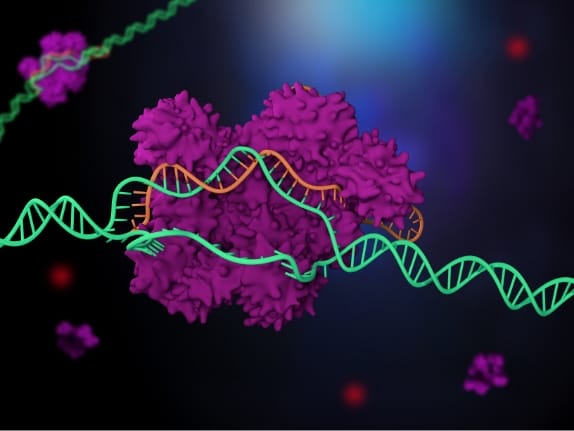
Researchers develop “immunosilencing” technique, can make CRISPR-Cas9 gene editing safer, more reliable.

FDA victory
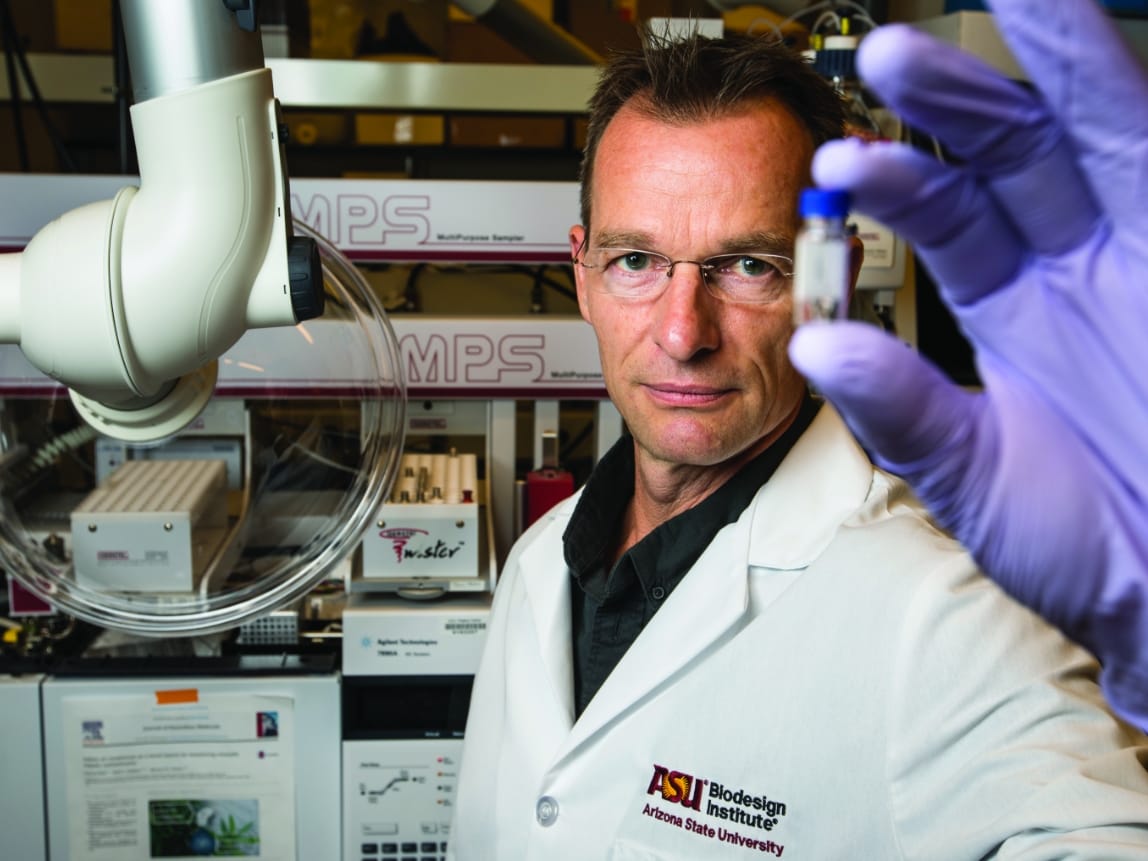
FDA draws from ASU studies to ban products with antimicrobials, long-term exposure could pose risks.
ASU and Ebola
Workers infected with Ebola virus recover after receiving experimental ZMapp treatment.
FDA OK autism study
Treatment study of children with autism resulted in an 80% reduction of certain symptoms and behavior.

Obesity and gut microbes
Gut microbes may affect weight, study from ASU and Mayo Clinic could become future obesity treatment.
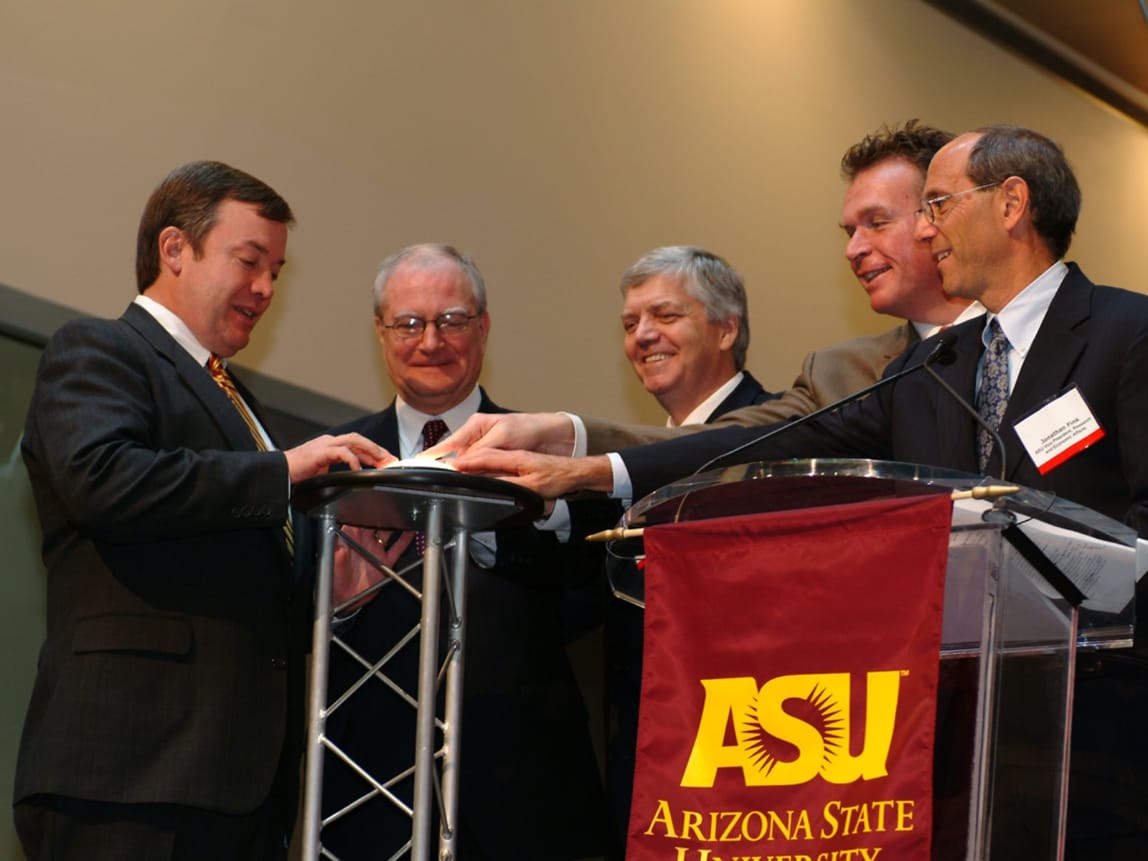
Biodesign opens
A new, collaborative and interdisciplinary institute reflects ASU’s vision for rapid research.
Spotlight: Our alumni
Read about our past researchers and staff who have carried our spirit of collaborative innovation into all of their endeavors.

Better together: ASU Biodesign thrives on collaboration
The Biodesign Institute was founded as a unique science environment, a community of researchers collaborating across disciplines to fuel rapid discoveries. Like any community, Biodesign requires a variety of abilities, expertise and perspectives to excel at its highest level. Empowering faculty, staff and students to work and grow together, and to discover and expand their potential in any role, allows the Biodesign community to thrive.

Training budding innovators to challenge the impossible
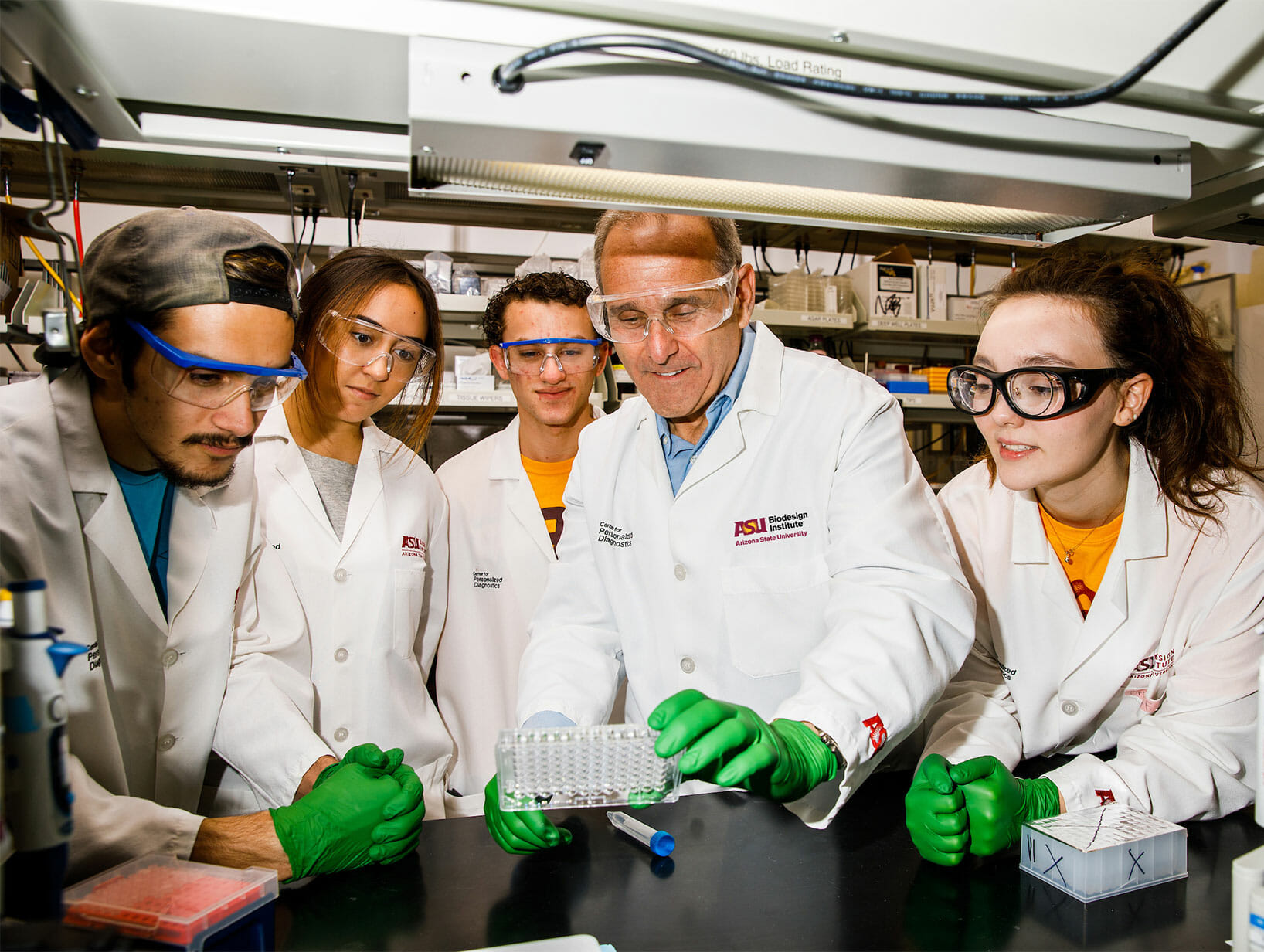
For college students who want to pursue careers in science, working in a research laboratory offers invaluable experience. Not only do students get to practice the lab or analytic techniques they learn about in the classroom, but they gain sought-after skills for working on diverse science teams, such as collaboration, communication and project management.

Biodesign ‘alumni’ aid the fight against infectious diseases
Engineering microbes to fight deadly diseases. Constructing research buildings that promote collaboration through their very design. Producing COVID-19 test kits to save lives in Arizona. These are just a few of the ways that faculty, staff, students and volunteers in the Biodesign Institute at Arizona State University have been making an impact and improving lives around the world since 2004.
Impactful approach
Our university was the first in the United States to create an interdisciplinary research institute entirely devoted to overcoming complex societal issues by emulating the design rules and trial-and-error approach found in nature.
This includes an entrepreneurial research culture that is attractive to scientists capable of working across disciplines, as well as close cooperation with industry to translate discoveries into commercially viable products and clinical practices.
ASU’s efforts are part of a larger statewide initiative, Arizona’s Bioscience Roadmap, to build a robust bioscience economy in Arizona.
What is our research focus?
We are addressing an expansive array of global challenges, including new vaccine discovery and delivery; early detection and treatment of cancer and infectious diseases; techniques for detecting and removing contaminants from air and water; and the application of nanotechnology for biomedicine and electronics.
Our newest centers are exploring the human microbiome and sustainable materials manufacturing. As our research teams multiply, so do our research capabilities and impact.

Students are integral to our success
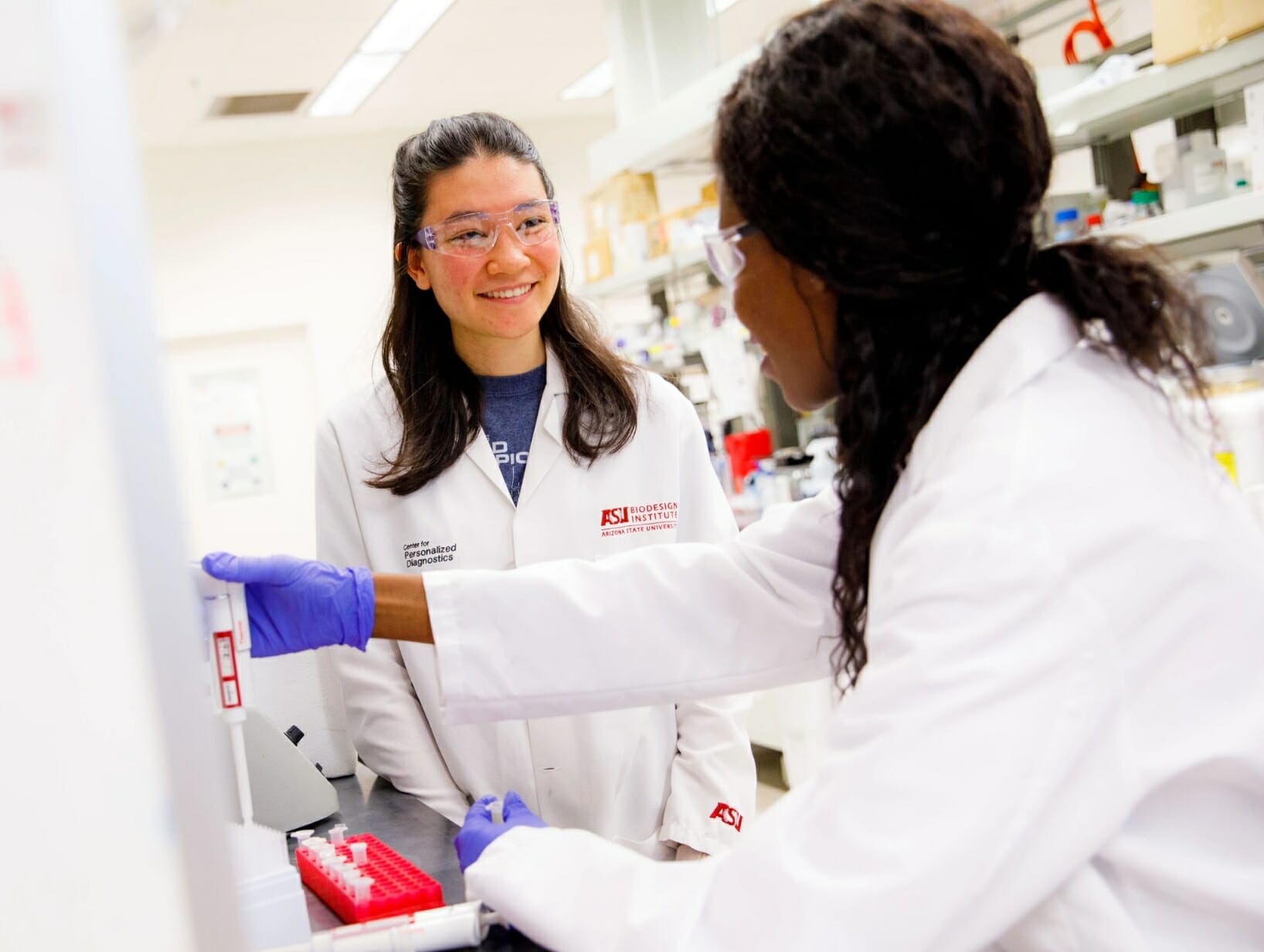
In fact, we employ hundreds of graduate and undergraduate students. We provide them opportunities to work alongside our world-renowned scientists and their teams.
While the Biodesign Institute is part of ASU, we do not offer traditional classroom experiences. Instead, we engage students in actual ongoing scientific discovery. Cross-disciplinary teams in an open-lab environment provide the structure for an invigorating hands-on way to train future scientists. We provide them with the experience they’ll need to one day take our place.
What has been our impact
so far?
Our top scientists from around the world collaborate across disciplines to discover nature-inspired solutions that advance human health, community safety and global sustainability.
The Biodesign Institute’s impact is evidenced in three key areas: capturing significant external funding to generate research output, attracting premier scientific talent and high-wage jobs to Arizona, and spurring innovation that produces economic growth.

Explore our discoveries
Our scientifically diverse teams are remarkably successful in securing funding for their research from government and industry partners. See how in this timeline of impact.
Make an impact
Your support enables hundreds of experts — biologists, physicists, chemists, engineers, mathematicians — to solve some of the world’s most urgent problems in health care, sustainability, security and more